
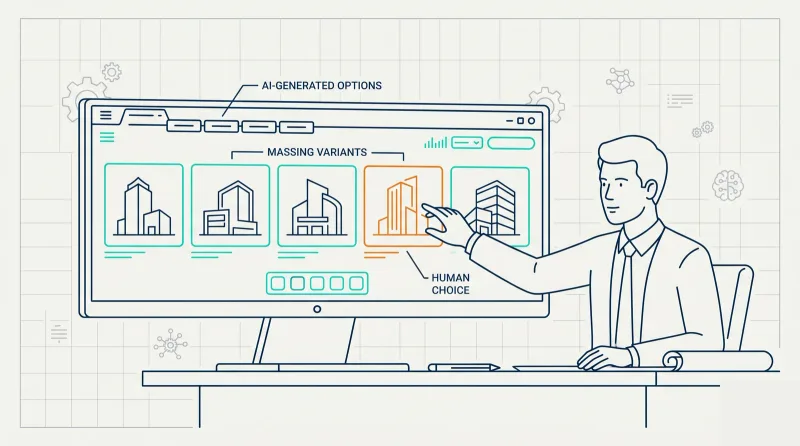
News & Insights | July 1, 2026
Why Small and Mid-Market AEC Firms Can Leapfrog Bigger Rivals With AI
The AI advantage in architecture and engineering is going to the nimble firms, not the biggest ones. Here is why, and what to do about it.
By Reid McConkey
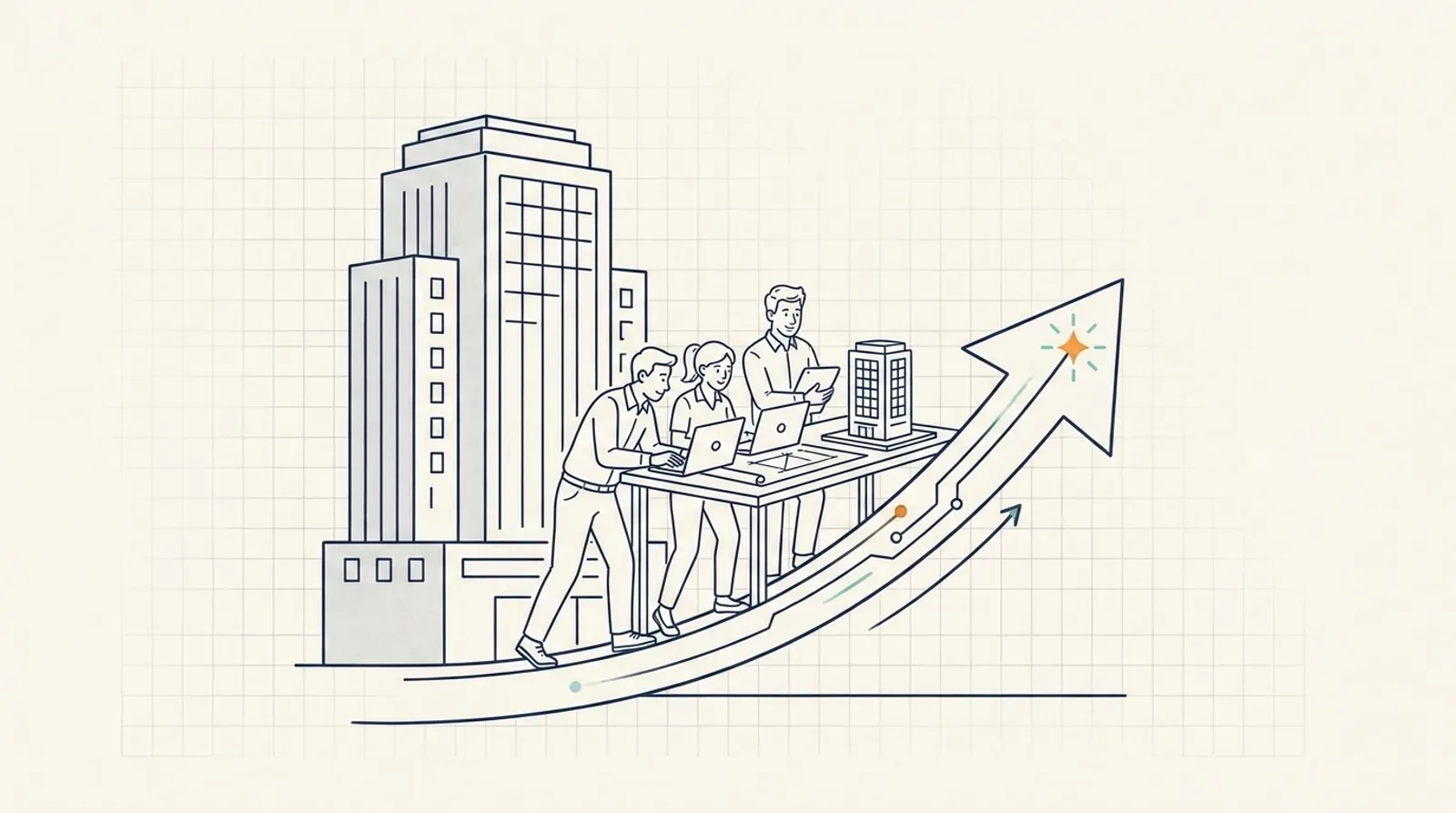
The firms best positioned to win with AI in architecture and engineering are not the largest ones. They are the 20-to-80-person practices that can change how a whole team works in a few months rather than a few years.
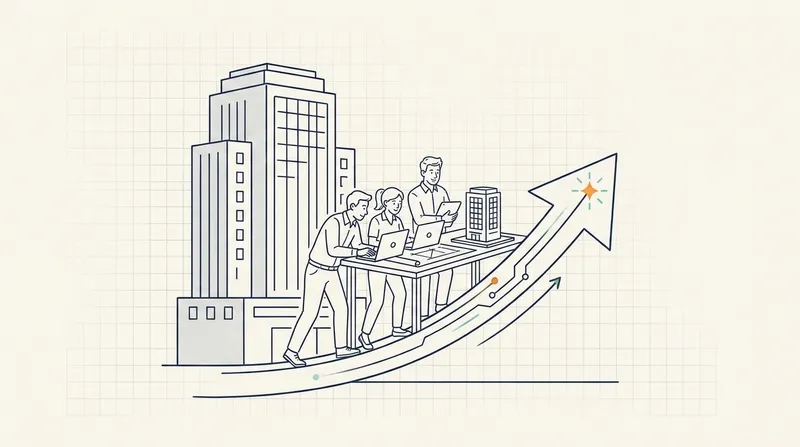
The window to get ahead with AI is open, and for once it favors small and mid-market firms. Large firms move slowly, and many are still paying for tools they bought before the technology was ready. The models are finally good enough, the hard part (the workflows around them) has been worked out, and a nimble firm can adopt in a quarter what a 500-person firm will spend two years debating. This is a rare moment when being smaller is the advantage.
For most of the last decade, scale won. The biggest firms could afford the enterprise software, the dedicated IT department, the pilot programs. If you ran a 40-person practice, you watched the giants move first and hoped the tools would eventually trickle down to your budget.
AI has flipped that. For the first time in a while, the binding constraint is not money or headcount. It is how fast a firm can change the way it works. That is a game small and mid-market firms are built to win.
And this is not a niche argument. Architecture and engineering is overwhelmingly an industry of small and mid-market practices, not a handful of giants. For once, the advantage is within reach for almost everyone reading this.
Why the giants are stuck
Two things slow a large firm down, and both are working against them right now.
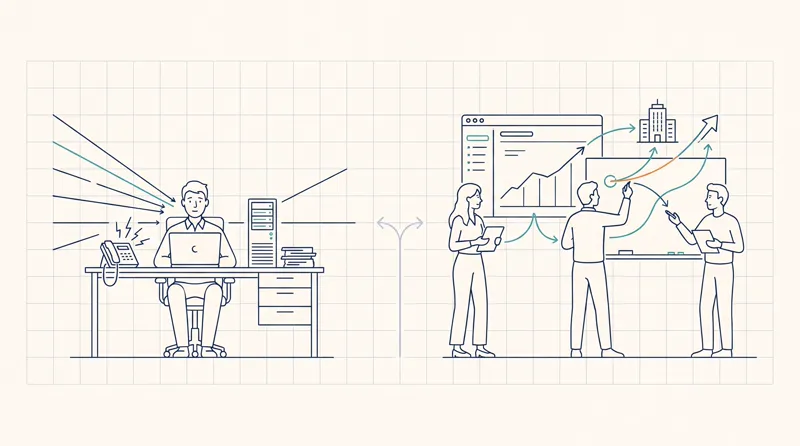
The first is process. A 500-person firm cannot change a workflow without a committee, a rollout plan, a training schedule, and a dozen stakeholders who each have a reason to wait. What takes a small firm one conversation takes a large one two budget cycles.
The second is the cost of moving early. Plenty of large firms did move early, in 2023 and 2024, when the technology genuinely was not ready. They stood up AI committees, signed multi-year enterprise contracts, and built custom tools on models that could not yet be trusted with real work. Now they are carrying the sunk cost of those decisions, along with the internal politics that come with admitting the first attempt did not land. The result is a firm that spent a great deal of money to be early and is somehow less able to act now, when acting finally pays off. That is the classic incumbent trap, in its most expensive form.
Why now is genuinely different
It is fair to be skeptical. A lot of AI promises have not survived contact with a real deadline. So here is what actually changed.
The models crossed a threshold. The frontier models released over the past year, Claude Opus 4.8 and Claude Fable 5 among them, are not just incrementally better than what came before. They follow instructions precisely, reason through multi-step problems reliably, and read the documents your team already works with. The gap between an impressive demo and dependable work has closed in a way it had not two years ago.
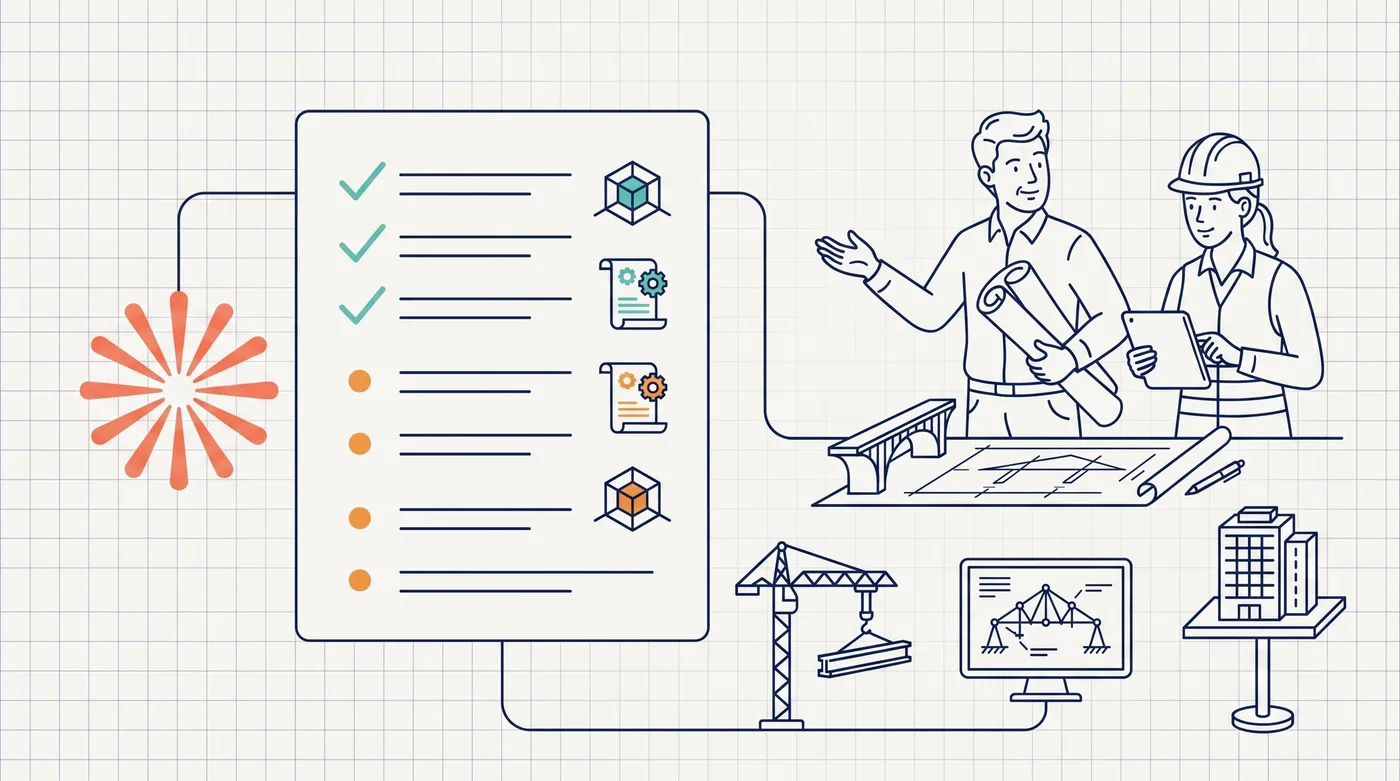
The hard part has been worked out, and it lives in the application layer. The model was never the whole answer, and it is fast becoming a commodity as the leading models converge on the same core capabilities. What actually matters is the application layer built on top of it: the workflow that takes a request, applies your firm’s standards, checks its own output, and returns something a licensed professional can put their name on. That layer is where the real engineering happens, and it is exactly the work firms like ours exist to do, so your team does not have to.
That distinction matters more than the model itself. A raw model is a brilliant intern with no supervision. Everything that makes AI safe and useful inside a professional practice lives in the application layer: standardized workflows, guardrails on what the tool can and cannot do, and consistent, reviewable outputs. Reliable, useful, and safe are not properties of the model. They are properties of the application layer you build on top of it. Get that layer right and AI becomes something you can stand behind. Get it wrong and it becomes a liability you will not notice until it costs you.
The advantage of being nimble
Here is where small and mid-market firms pull ahead.
You can decide quickly. The people who set direction are close to the work, often in the same room. A good idea does not have to survive six months of committee to reach the people who will use it.
You can change your culture fast. Adopting AI well is less about software and more about how a team works: what gets drafted first by a tool and reviewed by a person, where professional judgment stays, what “done” looks like now. A 30-person firm can shift that in a quarter. A large one measures the same shift in years.
You are not carrying dead weight. You did not spend 2023 building something that has to be defended now. You get to start from what works today, with none of the sunk cost and none of the politics.
What this means for your firm
The opportunity is real, but it is not automatic. Nimble only helps if you move deliberately. Adopting AI without the guardrails is how firms end up with inconsistent output, data they did not mean to expose, and a tool nobody trusts. The goal is not to be first. It is to be the firm that adopted well while your competitors were still deciding whether to.
And be clear about what the prize actually is. Getting AI right is not about doing the same work a little faster. It is about handing your senior people back the hours that busywork steals, so they spend them on the work that wins better clients, and about building an honest record of what your projects really cost, so you can price the next job with confidence instead of a guess. Speed is the mechanism. The payoff is better work and the confidence to charge what it is worth.
That is the actual work: figuring out where AI fits your specific practice, building the standardized and guardrailed workflows that make it dependable, and keeping your licensed professionals as the decision-makers on everything that matters. It also happens to be the conversation we have with firm leaders every week. If you want a clear read on where your firm stands and what a sensible first step looks like, that is what a Strategic AI Assessment is for. You get an honest picture of where AI would pay off in your practice and a prioritized plan, and the deliverables are yours to keep.
News & Insights
All insights