

News & Insights | March 11, 2026
AI Won't Replace Architects. But the Firm Down the Street Might.
AI will not replace architects, but AI-forward firms will out-deliver the rest. What the shift to AI-native design means and how firm leaders prepare now.
By Reid McConkey
At a Glance
AI in architecture and engineering is moving beyond incremental productivity gains. Within the next decade, leading firms will use AI not as a tool bolted onto existing processes, but as the foundational layer of how design work gets done. For firm owners and principals, the question isn’t whether this shift will happen. It’s whether your firm will be positioned to benefit from it or be displaced by it.
The Current State: Useful, Not Transformative
I’ve spent the better part of fifteen years working alongside architecture and engineering firms on their technology. The current wave of AI adoption in the industry is real, but it’s important to be precise about what it is and what it isn’t.
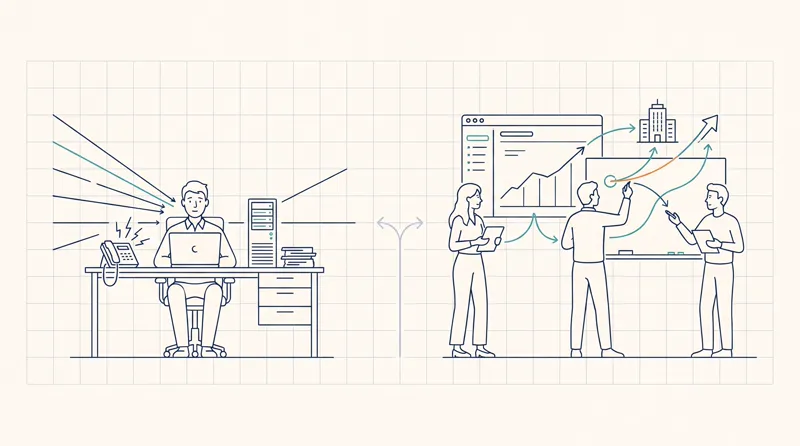
Most firms today are using AI at the margins. Copilot handles email drafts and meeting summaries. Generative tools assist with early-stage massing studies. AI-powered clash detection runs faster than manual review. Quantity takeoffs that used to take a junior staff member two days now take an afternoon. These are genuine efficiency gains, and they matter.
But they don’t change the fundamental structure of how a project gets delivered. The workflows are the same. The roles are the same. The bottlenecks are the same. You’re doing the same work, slightly faster.
That’s the current state. It won’t be the future state.
The Shift: From AI-Assisted to AI-Native Design
The transition that’s coming over the next five to ten years is not about better plugins or smarter assistants. It’s a structural change in how design and engineering work gets produced.
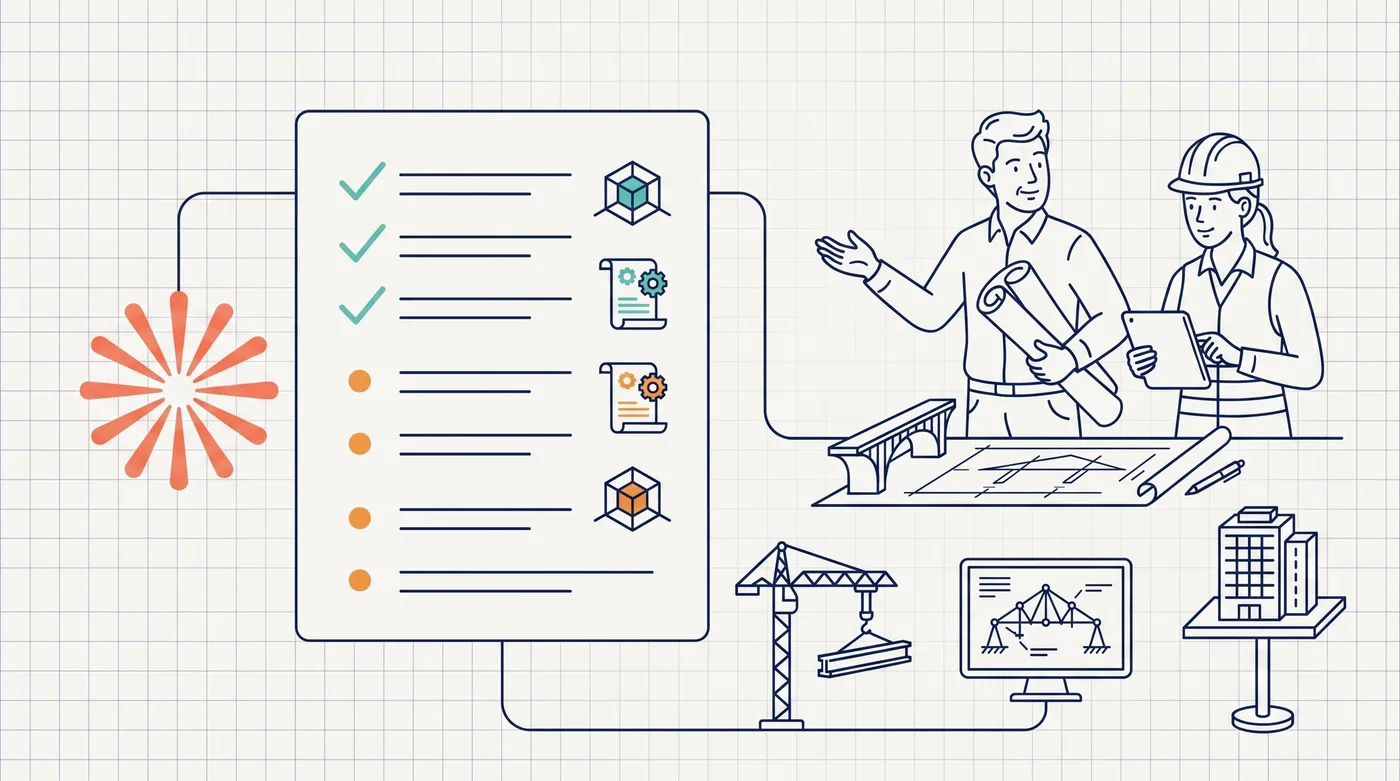
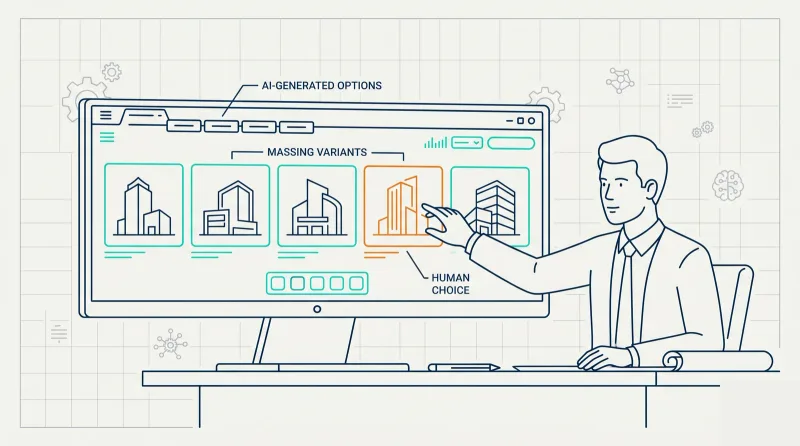
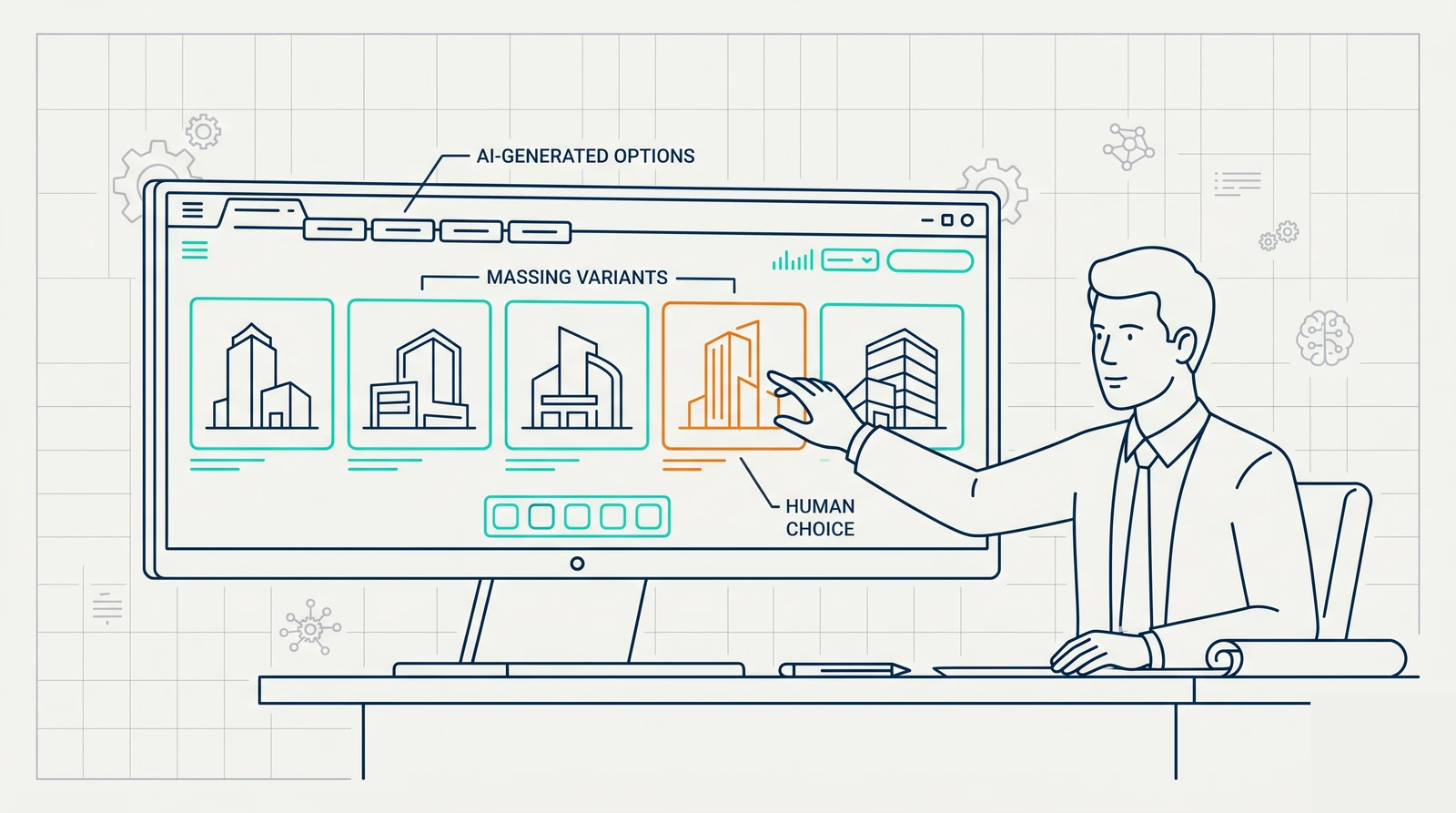
Consider what this looks like in practice. A principal architect defines project intent: program requirements, site constraints, budget parameters, code compliance targets, sustainability goals. AI generates dozens of viable design options, each already validated against structural, energy, and zoning criteria. The architect evaluates, selects, and refines. The structural engineer validates with AI assistance rather than building an analytical model from a blank screen. The mechanical engineer runs performance simulations that used to take weeks in a matter of hours.
The human role shifts from producing deliverables to making decisions about deliverables. That distinction matters enormously.
This isn’t speculative. The foundational technologies already exist. Autodesk’s generative design capabilities, AI-driven structural analysis tools, and natural language interfaces for BIM platforms are all in market today in some form. What’s changing is the integration, the maturity, and the speed at which these tools are converging into coherent workflows.
For firm owners, the critical insight is this: the professionals in your firm become more valuable in this model, not less. Design judgment, client relationships, regulatory knowledge, accountability for the built outcome, these are the things AI can’t replicate. What it can replicate is the repetitive production work that currently consumes the majority of your team’s billable hours.
The human role shifts from producing deliverables to making decisions about deliverables.
The Competitive Implications
This is where the conversation shifts from interesting to urgent.
Firms that adopt AI-native workflows will deliver projects dramatically faster. Not marginally. When a competing firm can generate and evaluate twenty design options in the time it takes yours to develop one, you’re not facing a productivity gap. You’re facing a categorically different type of competitor.
We’ve seen this pattern before. The transition to BIM created a clear dividing line in the industry. Firms that adopted early didn’t just gain efficiency. They won work that firms still producing 2D deliverables couldn’t compete for. The AI transition will follow the same trajectory, but compress the timeline significantly.
I’m not suggesting that every firm needs to go all-in on AI tomorrow. That would be irresponsible. But firm owners who are still treating this as a future problem in 2028 will find themselves competing for the work that AI-forward firms don’t want. That’s not a position any principal wants to be in.
The construction side of AEC will feel this too, particularly in preconstruction, estimating, and project controls, but the impact on design-driven firms will be earlier and more pronounced. Architecture and engineering practices are where the production-to-judgment ratio is highest, which means the AI advantage is greatest.
What Firm Leaders Should Be Doing Now
The full AI transformation is years away. But the decisions that determine whether your firm is positioned to lead or scramble are being made right now. Three areas deserve immediate attention.
Get your data ready. Every AI capability your firm adopts in the next decade depends on the quality and accessibility of your project data. It’s the least exciting item on this list, and it’s the most important. No AI tool delivers meaningful results from files scattered across personal drives, disconnected SharePoint libraries, and email inboxes.
- Audit how your project data is stored, organized, and accessed
- Establish standards and migrate legacy data into one well-structured, centrally accessible home
- Treat it as foundational work that pays dividends whichever AI tools you ultimately adopt
Put infrastructure on the roadmap. AI workloads (generative design, real-time simulation, large language model integration) demand substantially more from your network, storage, and endpoints than traditional BIM workflows. Most firms we work with are not ready yet, and that’s perfectly normal at this stage.
- Plan capacity now, whether your firm runs workloads locally, in the cloud, or in a hybrid configuration
- Scale the stack alongside your AI ambitions rather than facing a costly, disruptive upgrade after adoption
Bring your people along. This is the area that gets the least attention and matters the most. The firms that navigate this transition successfully won’t be the ones with the largest software budgets. They’ll be the ones whose teams see AI as something that makes their expertise more impactful, not something that threatens their relevance.
- Invest in training and redefine roles to emphasize higher-value work
- Have honest conversations about how project delivery, skills, and advancement structures will evolve
- Treat the human side as seriously as the technology, or struggle regardless of what you spend on tools
Looking Ahead
The architecture and engineering industry is heading toward a future where AI isn’t a feature in your software. It’s the foundation of how your firm operates. The transition won’t happen overnight, and there will be false starts and overpromises along the way. But the direction is clear, and the firms that begin preparing now will hold a decisive advantage over those that wait.
At Resolved, we built our practice around architecture, engineering, and construction firms. It’s our core focus. We understand the tools you use, the compliance requirements you navigate, and the project delivery workflows that drive your business. If you want to know where AI fits your firm, our Strategic AI Assessment starts with a free 30-minute discovery call and hands you a prioritized 24-month roadmap, yours to keep.
News & Insights
All insights